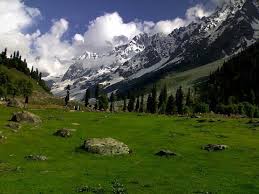

The Lolab Valley is a Himalayan valley located in Jammu and Kashmir, India. The entrance to the valley lies 9 km (5.6 mi) north of Kupwara town, and the centre of the valley lies 114 km (71 mi) northwest of Srinagar,
the capital of Jammu and Kashmir. It is an oval-shaped valley 15 miles (24 km) long with an average width of 2 miles (3.2 km). Lolab Valley is also home to many Himalayan wild animals, which include Himalayan black bear,
Himalayan brown bear, snow leopard, ibex, markhor, hangul and musk deer. Lolab Vally is adjacent to Neelum Valley, and separated by the Line of Control. The Valley has seen many armed combats, which has resulted in the displacement of many wild animals.
Geography Access Tourism Poets About Lolab Valley Sports Golf Course
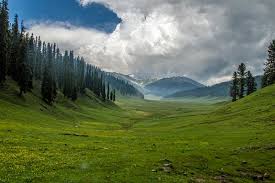
The Lolab Valley is situated within the jurisdiction of Sogam Lolab, a block of Kupwara. It is bordered by the Kashmir Valley to the south and the Neelum Valley to the north,
and is separated by Nagmarg meadows from Bandipore to the east. It is formed by the flow of Lahwal River, which flows from east to west. The Lolab Valley is home 9 many
ancient springs, and is covered with dense forests of pine and fir. Fruit trees such as apple, cherry, peach, apricot and walnut are common in the valley, which is known as
"the fruit bowl of Jammu and Kashmir". The valley has several natural landmarks and tourist spots, such as the caves of Kalaroos. The main villages in the Lolab Valley are Putushai,
Diver, Khumriyal, Sogam, Lalpora,Cherkoot,Kalaroos,Wavoora, Warnow, Michal, Takipora, Goose etc. The Lolab Valley has two divisions: Poutnai and Brunai. The areas included in POUTNAI are,
Chandigam, etc. In Brunai are Kuligam, Cheepora, Varnow, etc. There is way from Lolab to Bandipora via Nagmarg-Kitsen.
The Lolab Valley is well connected by road to Srinagar, the capital of Jammu and Kashmir, and Srinagar Airport. A bus takes three hours to cover a distance of 114 km (71 mi) and leads through the towns of Sopore and Kupwara. An under-construction road from Bandipora to Lolab via Nagmarg Meadows will cut short the Srinagar-to-Lolab distance by 30 kilometers. In Lolab Valley, there are a few tourist huts and many camping sites.
It has the potential to become one of the best tourist destinations in Kashmir.
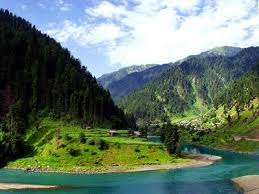
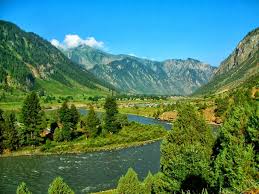
Travelers visiting Lolab sometimes visit the resting place of the saint Kashyap reshi, which is located at a distance of 1 km from village Lalpora. A spring called Lavnag can be found nearby.
The spring is three feet deep and has crystal clear water. Gauri spring is another major spring in the area. Due lack of intervention by government the place has very poor flow of tourists which keeps it potential for tourism still unexplored.
This place still manages to be one of the top most camping sites in Kashmir.
Some tourist attractions in the valley include Nagmarg Camping Site Diver Anderbugh, Satbaran Kalaroos, Chandigam, Warnav, Machil and Kariwan Green Meadows Diver.
Lolab Valley was once visited by one of the greatest Urdu poets of all time, Dr. Sir Muhammad Iqbal and wrote a poem, O Valley of Lolab! in the honour of Lolab's natural environment.
Poets like to refer to Lolab as a true destination and as �land of love and beauty�.
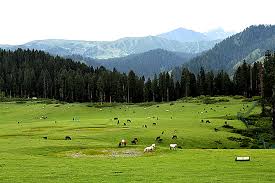
Lolab valley is 5km wide and 26 km long. It is located at a distance of 120 kms from Srinagar in Kupwara district. Lolab is a combination of three valleys, Potnai valley, Brunai valley and Kalaroos valley.
There are beautiful Nagmarg meadows, which separate Lolab from Bandipora district.
The headquarters of Lolab is situated at Sogam. It is said that Sogam was very densely populated a long time ago, when Kashmir valley was still a lake called �Satisar�. Travelers visiting Lolab also visit the resting
place of a famous saint Kashyap reshi, which is located at a distance of 1 km from village Lalpur. A spring called Lavnag can be found nearby. The spring is three feet deep and has crystal clear water. Gauri spring is another
major spring in the area. Government has taken several steps to maintain Lolab Valley to its pristine beauty.